When Taylor Swift releases a new album, the internet is bound to go wild. Whether it’s scathing reviews, political commentary on Swift’s behavior or new TikTok trends, it seems that everyone immediately runs to form an opinion on the album and the artist behind it. As Spotify’s most pre–saved album of all time (and the first ever album on the platform to surpass 5 million pre–saves), “The Life of a Showgirl” was bound to be no different.
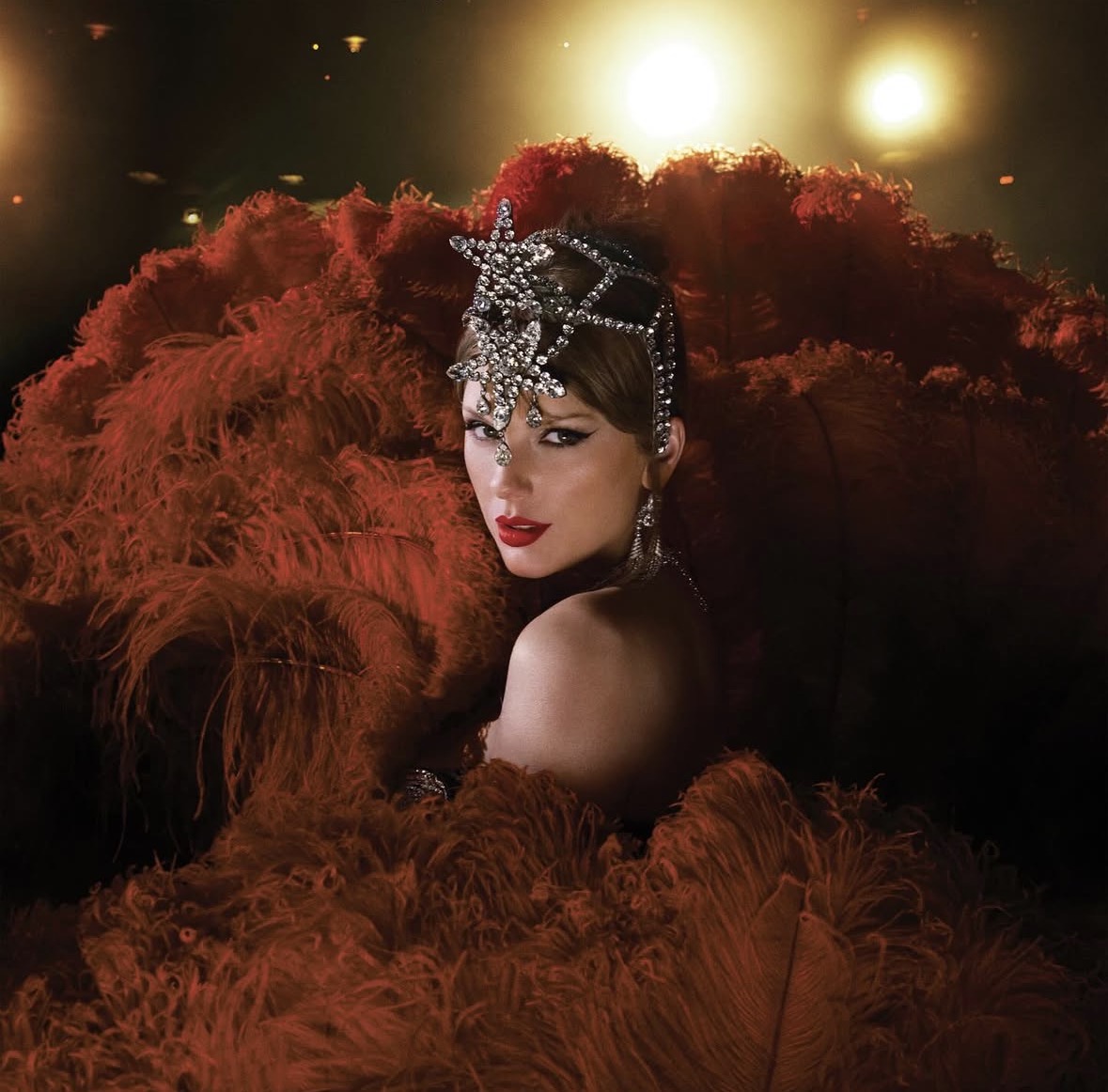
If there’s one thing that all of Swift’s albums have in common, it’s that each and every era is distinct from all the others. Swift’s newest album is no exception to this rule. Drenched in champagne, covered in sequins and donning towering feathered headpieces, the vivid colors and imagery of Swift’s 12th studio album capture, miraculaously, a feeling that Swift has yet to encounter up to this point in her decades-long career. Especially following “The Tortured Poets Department,” which was thematically exuding colorless heartbreak and prosaic reflection, “The Life of a Showgirl” comes as a stark change.
Stepping away from her longtime partnership with producer and close personal friend Jack Antonoff for the first time since the release of “1989” in 2016, Swift returned to pop icons Max Martin and Shellback to produce her newest ode to fame and love. Martin and Shellback have worked with Swift before on her albums “Red,” “1989” and “Reputation,” and have helped to create some of her most iconic tracks — “We Are Never Getting Back Together,” “Shake It Off” and “Bad Blood,” to name a few.
The choice signifies a departure from the more melancholy, indie style that Swift has been writing in for the past few years of her extensive career. The production on “The Life of a Showgirl” elicits the big beats and bass lines of Swift’s pop era, reimagined with a rougher edge — a marriage of Swift’s new lyricism and her familiar home in the pop genre. Martin and Shellback reinvent themselves around Swift’s new style, taking inspiration from Eurodance beats (as seen in “Opalite”) to pop-punk steel guitars (as seen in “Actually Romantic”).
“The Life of a Showgirl” is also the second shortest of all of Swift’s released albums, which comes as a huge departure from her previous album. “The Tortured Poet’s Department,” released in April of 2024, contained a whopping 31 tracks and, in its totality, was over two and a half hours long. “The Life of a Showgirl” is a brisk 12 songs, running at a clip of 41 minutes. It’s short and sweet, capturing and distilling Swift’s vision into a tight, effective album.
Another major departure from “The Tortured Poets Department” is the subject matter. While “The Tortured Poets Department” saw Swift coping with heartbreak and overwhelm, almost entirely containing emotional tracks with esoteric lyricism, “The Life of a Showgirl” finds Swift in a seemingly much happier stage of life, releasing about a month after the announcement of her engagement to longtime boyfriend and NFL star Travis Kelce. The new album finds Swift content and in love, dreaming of what married life could mean. It is effectively her first ‘love song’ album since “Midnights,” and the production echoes the upbeat, more high–spirited nature of Swift’s new mindset.
For better or for worse, “The Life of a Showgirl” abandons some of the more serious themes and lyricism of Swift’s past few albums. The songs are simpler and easier to understand, which has earned her both acclaim and derision in the week since the album’s release. While the album isn’t serious because it doesn’t need to be, fans were still slightly disappointed by the occasional instance of cringey, more Millennial writing. “The Life of a Showgirl” is undeniably a simpler album than lyric–heavy entries like “The Tortured Poets Department” and “Folklore,” featuring lyrics like “I can make deals with the devil / because my d—’s bigger,” from the track “Father Figure.”
The album begins with what is arguably its most popular track and the only single, “The Fate of Ophelia.” The track buzzes with the borderline grunge attitude expanded upon later in tracks like “CANCELLED!” and “Actually Romantic,” but simultaneously brings a steady, undeniably pop spirit reflected in tracks like “Opalite” and the titular track itself, “The Life of a Showgirl (feat. Sabrina Carpenter).” The song alludes to the fictional tragic heroine Ophelia from William Shakespeare’s “Hamlet.” This kind of literary or historical reference to a famous woman is familiar to fans of Swift’s work, reflected once again in the following track, “Elizabeth Taylor.”
For some, “The Life of a Showgirl” is a major disappointment. An article from The Guardian even supposes that the strengths of Martin and Shellback in creating “pop bangers” are nowhere to be found. It argues that, “Even the immortal, it seems, sometimes need to take a break from pop’s constant churn and unceasing clamour for content.” This criticism refers to the 10–month stretch between the release of “The Life of a Showgirl” and the end of the record–breaking Eras Tour, suggesting that the album could’ve used more polishing.
Others have been praising the simplistic, carefree zeal that Swift brings to the forefront in “The Life of a Showgirl.” In Rolling Stone’s review of the album, Maya Georgi praises the singer’s composition. Georgi defends the album’s creativity, maintaining that, “With its spotlight concept and showstopping production, ‘Showgirl’ is the direct result of Swift’s all-encompassing career feat — and an extension of it.” Georgi proposes the album as the culmination of all Swift has learned, a collection of her vast knowledge of songwriting as a craft.
Altogether, like all of Swift’s recent works, “The Life of a Showgirl” is nothing if not divisive. It serves as a major departure from anything the artist has released in the past decade. While it’s missing some of the prosaic lyricism and melancholy themes that made her more recent albums, tracks like “The Fate of Ophelia,” “Opalite” and “The Life of a Showgirl (feat. Sabrina Carpenter)” are undeniably fun and deliver a confident energy that Swift hasn’t employed since she last worked with Martin and Shellback. While other tracks — namely “Wood” and “Wi$h Li$t” — suffer due to their more obvious, less compelling writing, the production is still solid throughout the album. Each song flows into the next, and the entire project has a strong thematic undercurrent.
Rating: 7/10