It’s no secret that I love a good movie musical. I confess, as a former theater kid, it’s a difficult habit to kick. There’s something about the escalating emotion that only music can capture that has always attracted me, in no small part due to my parents’ love of music and theater. I was raised in a musical house where every night was movie night, so it only makes sense that movie musicals have always held a special place in my heart.
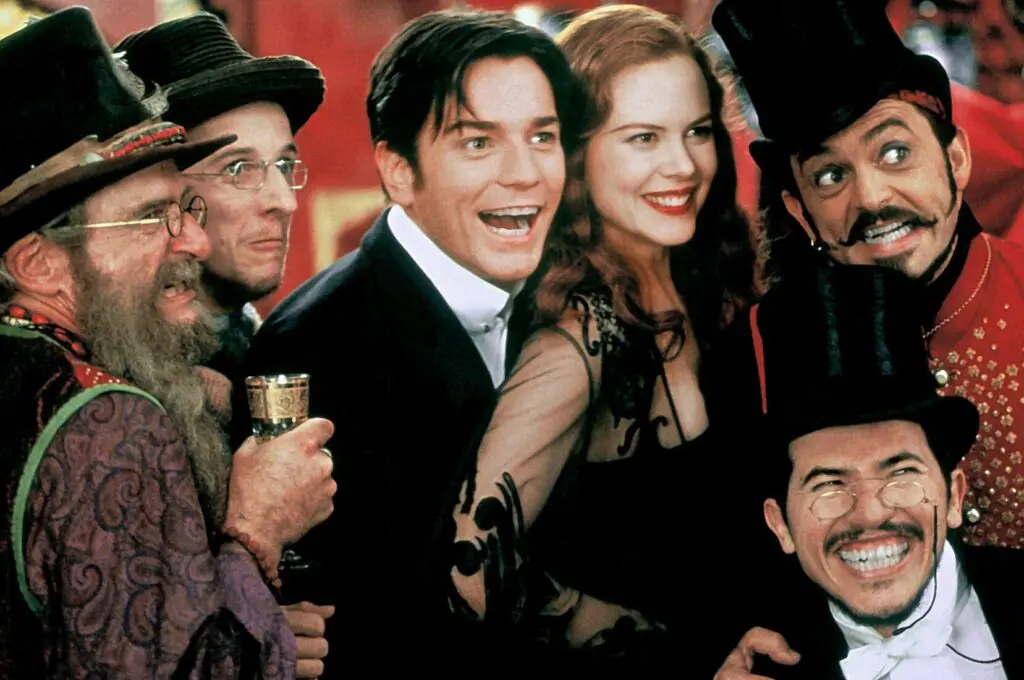
“Moulin Rouge!” was released in 2001 and stars Hollywood icons Ewan McGregor and Nicole Kidman. Coming off the success of “Romeo & Juliet,” director Baz Luhrmann had a big budget and the critical acclaim to really go off the rails, and push his stylistic edge to the brink. The editing is frenetic and sped up at times, taking long and sudden breaks of slow motion at others. The tone jumps from high–energy dance breaks to long, melancholy montages and somehow manages to make both work.
I’ve admittedly watched this movie several times, but every time I do, I tend to notice something wholly new about it. This time around, the “Come What May” sequence in particular stood out. While the musical numbers are almost completely composed of popular songs from the ‘80s and ‘90s, rearranged to fit different tempos or rhythms depending on the moment, this moment specifically fits like a glove into the narrative of the film. But “Come What May” is the only original song written for the film, and arguably packs the biggest emotional punch—and if you’ve seen the film, you’ll understand exactly why.
Speaking of the music, McGregor and Kidman knock it out of the park. The entire ensemble does a surprisingly good job, especially with one of the very first live action original movie musicals. The original story and Luhrmann’s direction made this film a huge theatrical risk. Luhrmann’s ultra-stylized production design, color grading and editing makes this film incredibly unique. And that’s before you factor in the big flashy musical numbers and arguably absurd needle drops.
Luckily, while “Moulin Rouge!” could’ve easily been considered too absurd for the average theatergoer, it found a fervent audience of fans. It’s now considered one of the more popular cult classics, and the 2018 release of the Broadway adaptation only served to popularize it that much more. The film was nominated for nine Academy Awards in 2002, but the musical was nominated for 14 Tonys and won 10 of them.
While it’s hard for me to choose which adaptation of this story I enjoy more, the film is certainly the more accessible of the two. Both have their differences and their merits, but ultimately, both are incredibly fun, wholly unique experiences. And personally, the needle–drpos only make it that much more enjoyable to watch. The absurdity of some scenes is completely intentional, and conversely, the more emotional moments achieve a level of seriousness that makes it incredibly impressive that Luhrmann managed to balance those two emotions so well.
“Moulin Rouge!” truly has it all. It’ll make you laugh and cry, and the design of every individual element—from the sets to the costumes—transforms this film into something that hadn’t been attempted before and hasn’t been attempted since.