Fashion is political; art is political. Fashion is art, and the power of this medium is consistently undermined and overlooked for how revealing it is about the current state of a society on a social, economic and political scale. From acts of protest to responses shaped by economic recessions and booms, clothing has always functioned as more than merely fabric; it is individual expression and a method of resistance. Whether subtle shifts in trends or bold statements, fashion reflects the values and priorities of a moment, revealing how deeply personal choices are influenced by broader societal ideals.
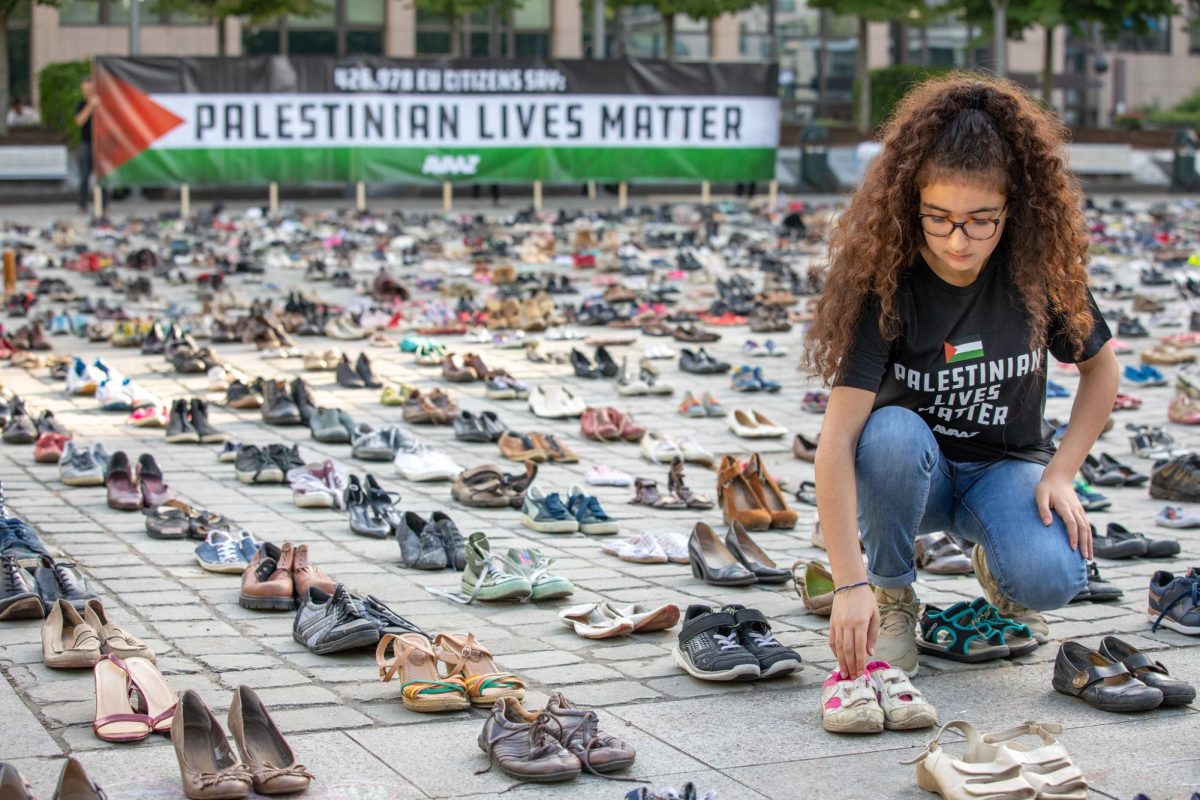
Fashion has been used as a crucial tool in political protest. Most famously, in the United States Supreme Court Case Tinker v. Des Moines, students in Des Moines, Iowa wore black arm bands in protest of the Vietnam War. While the students were initially suspended for this, the case made it to the federal courts which affirmed their right to freedom of expression. More recently, fashion designer Connor Ives wore a T-shirt at the 2025 Autumn/Winter London Fashion Week that reads “Protect the Dolls” in support of Transgender individuals across the United Kingdom. He now sells the shirt, with proceeds going to Not A Phase, an organization dedicated to uplifting the lives of Transgender adults.
Oftentimes, political fashion may not always appear so forwardly. Trends may also be related to society’s economic status. Clothes tend to become more neutral and less extravagant naturally during times of economic downturn.
The modern bikini, also known as the triangle bikini, was formulated due to the lack of available fabric after World War II. Louis Réard originally crafted the swimsuit from newspapers discussing the United States’ nuclear testing in Bikini Atoll, giving it its name. In times of war or shortly after, simplicity is especially relevant, as most funding goes towards the war efforts and recovery. Practicality and durability is prioritized over expression. However, this reflection is still political because of how directly it is impacted by the condition of the world.
Throughout the decades, the fashion industry has become inadvertently intertwined with the political and social attitudes relevant of that time. The 1920s, for example, was characterized as a period of economic prosperity and social progress; the era’s clothing reflecting this. The women wore looser fitting clothing, paired with bobs to create a boyish appearance as an act of subtle rebellion of old beauty standards that favored corsets and extreme modesty.
The rise of jazz culture brought bold dresses that were often decorated with sequins or beads, an almost complete switch from the Victorian styles which were much less expressive. Hemlines went up to anywhere from just above the ankle to just below the knee.
Then, in 1929, the Great Depression swept across the United States and fashion quickly shifted to focus on feminine silhouettes and practical, durable clothing materials. Modesty rose in importance once again as hemlines lowered to sit strictly at mid-calf. This connects into a larger theory known as the hemline index, which suggests that changes in hemline length correlates with the current economic conditions within a society. In periods of economic adversity, hemlines will get longer, while in periods of abundance, hemlines will get shorter. This is believed to occur because during a prosperous economy, cultural optimism encourages experimentation and individuality, while, during a suffering economy, cultural distress prefers security and durability.
In modern times, rising fashion trends are less connected to hemlines and instead typically begin online. The “Clean Girl” aesthetic exploded in popularity on TikTok in 2021, with a concentration on clear skin, makeup that does not look like you’re wearing makeup, gold jewelry, sleek hair and minimalism. On the surface, it seems like this content is simply wellness centered, however, it becomes exclusive when viewers begin to realize this effortless maintenance requires time and money the average person does not have. It alienates women of color, plus-sized women and many others who don’t fit its narrow standard of thin bodies, perfectly clear skin, or blonde slicked-back ponytails.
The “Old Money” aesthetic has similar issues, as it is marketed as classy or timeless, while also glamorizing inherited wealth and institutions historically built on exploitation. These social media trends correlate with the larger political shift towards conservatism among young voters. The romanticized conformity and unobtainably toxic beauty standards in these online aesthetics highlight the larger ongoing political regression in the world today.
Fashion is intertwined in everyone’s daily life, whether consciously or not. It does not evolve in isolation, and instead it reflects back to the world its own social, economic or political ideologies. Whether through shifting hemlines or modern internet aesthetics, clothing trends reveal underlying politics and economic realities in everyday life. By examining these patterns, it becomes evident that fashion is about so much more than just clothing on a body; it is about identity, expression and cultural revolution. Ultimately, what we wear is shaped by the world around us, and shapes how the world continues to evolve. There will never be neutrality in that. Fashion has always been, and always will be, political.