On April 12, 2026, at his “100 days” address, Mayor Zohran Mamdani announced the projected opening of five city-owned grocery stores across the five boroughs of New York City, the first opening marked for late 2027.
This move comes as a response to “unaffordable” life costs for New Yorkers. A report from the office of the New York State Comptroller estimated a cost increase of up to 65.8 percent for groceries between 2012-2013 and 2022-2023. The initiative intends to provide direct relief from these high costs to New Yorkers.
The initiative, titled “N.Y.C. Groceries,” will prioritize city-owned sites with strict requirements for affordable pricing, operations, labor standards and reporting. The City has allocated $70 million in capital funding for store construction. La Marqueta in East Harlem is the first site announced with a specified location, set to open in 2029.
The stores are not government-owned; rather, the city will take on a capital burden, construction costs and rent, while a private operator, carefully selected through a competitive procurement process, will run the store itself.
With the celebration of this plan, concerns have arisen, as well. According to the Food Industry Association, net profit for grocery retailers in 2024 was only 1.7 percent. The stakes of small errors in spoilage, procurement, labor scheduling or distribution is high. Therefore, according to economist James Broughel, the city must bring “genuine operational innovation” to market, not just subsidy. As of now, the limited details of pricing plans and cost allocation have inspired concern amongst economists and grocery industry leadership.
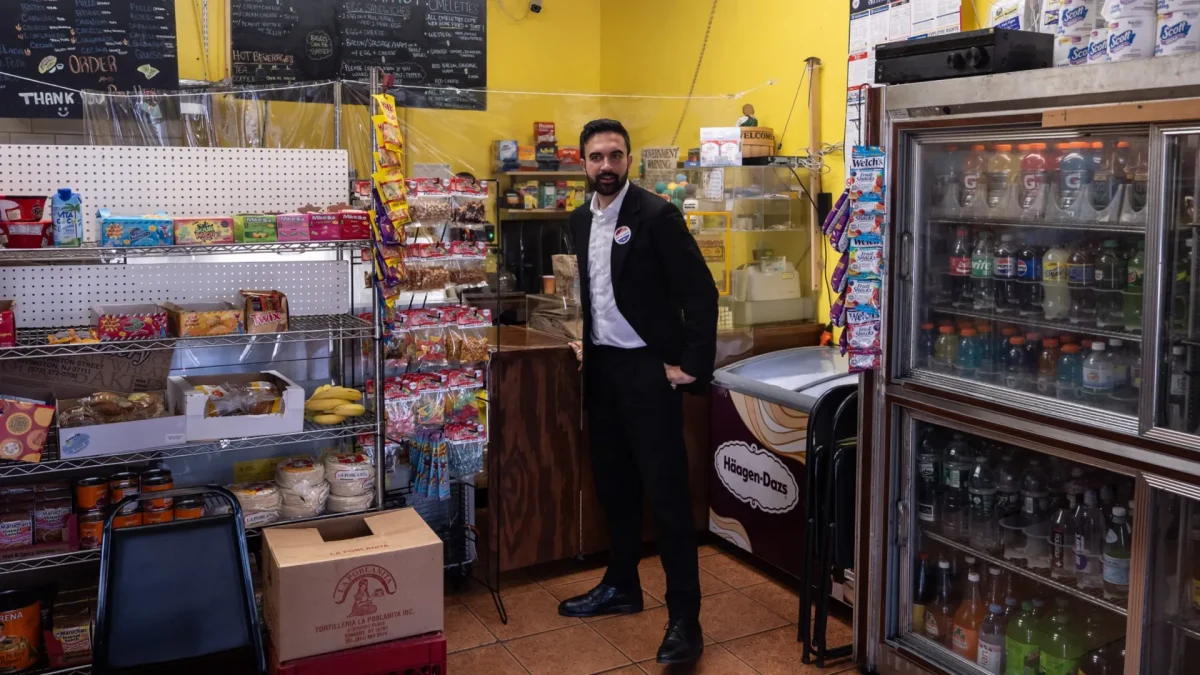
Concerns have been expressed by small business owners, as well, to which Mamdani responded. In his Town Hall on MS Now’s All In with Chris Hayes, Jerry Nunez, a local grocery market owner, shared fears about East Harlem’s La Marqueta, which is to be built only a few blocks from Nunez’s store.
“Your store was supposed to be in areas where the community didn’t have access,” Nunez said, “Why so close? Why – won’t this affect any other local businesses in [the] area?”
“My vision is not that there isn’t room for multiple grocery stores,” Mamdani responded. “My vision is that there is a grocery store within New Yorkers’ reach where they know they can afford certain things. We’re talking about the essentials that you can build a healthy life around… It is cheaper to eat worse in this country. We want to make it easier to be healthy… My vision is not that this becomes the only grocery store, rather that this be an option amongst an ecosystem that includes our brother’s grocery store and so many others.”
Amongst Mamdani’s efforts towards a more affordable New York, including child care and housing through development and expansion initiatives, “N.Y.C. Groceries” appears aligned with administration goals. According to critics, its success relies on a number of external factors, balance, and on the capabilities of the c to fulfill its role with innovation and diligence.