

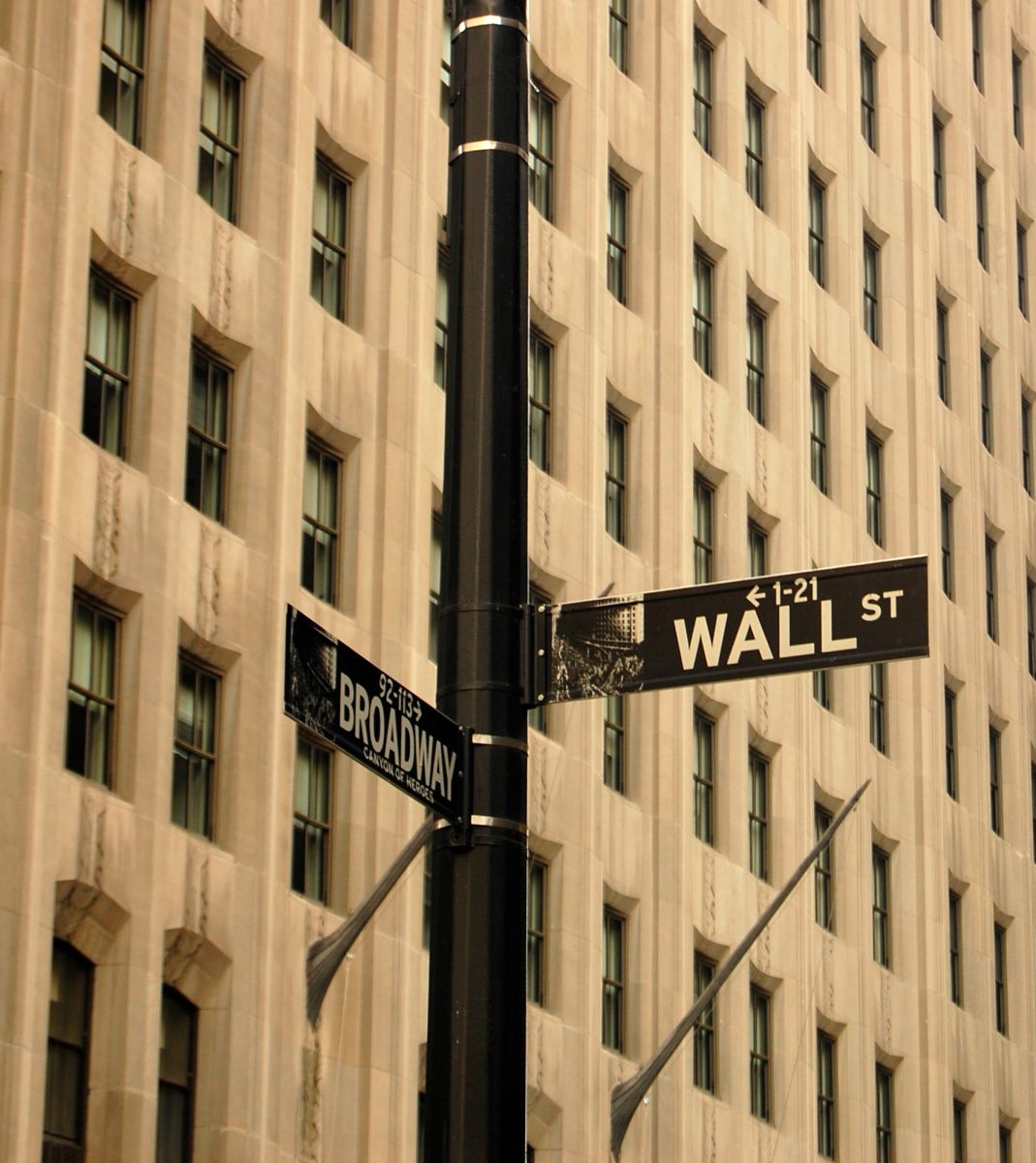
For decades, Wall Street, the world’s most recognizable financial district, has been synonymous with power, wealth and ambition. Movies like “Wall Street” and “The Wolf of Wall Street” have influenced how people imagine Wall Street, as an ambitious place where big risks are taken and big rewards are achieved, portraying the high-stakes lifestyle of the financial elite. Iconic landmarks such as the “Charging Bull” statue and the New York Stock Exchange’s grand facade attract tourists from around the world symbolizing the heart of America’s financial system. But in today’s world, where cryptocurrency, online trading and decentralized finance are reshaping how money moves through our economy, many people wonder if Wall Street is still as relevant as it once was, when one could not buy stocks with a mobile app on their phone.
To find out, we asked University business students whether they think Wall Street is still relevant in today’s economy. Among them were Constanza Bono, a Business Marketing major, and Antonella Tolces Krut, a Business Management major and international student from Paraguay. Students shared their perspective on how Wall Street fits into today’s evolving financial world and whether it still represents the ultimate goal for students and young professionals in business today.
For Bono, the answer is mixed. She believes that Wall Street remains relevant in the larger financial system, but not necessarily for her on a personal level. In her view, the financial district continues to hold symbolic and economic power, yet the changes in Wall Street services don’t affect her investments. “It doesn’t really affect me directly,” she explained, noting that she can invest from home using an app on her phone without relying on any traditional Wall Street platforms.
Her perspective highlights how investing transitioned from traditional Wall Street institutions. With online platforms and mobile apps, individual investors, like Bono, can now participate in the market without relying on brokers or major financial firms. Social media has amplified this trend: since early 2020, younger investors have used platforms like Reddit to share investment strategies, discuss stocks and even drive market events like the GameStop short squeeze, where coordinated buying forced major Wall Street hedge funds to cover their positions. This demonstrates how access to information and digital communities allows individuals to participate in the stock market independently, making Wall Street less central to everyday investing.
This event was also represented in the movie “Dumb Money,” which highlights how ordinary people, using social media and online platforms, can make waves in the financial world without stepping foot on Wall Street. It highlights how the traditional image of the Financial District as the center of power is being challenged by a new generation of investors who rely on technology and community rather than brokers and big firms, demonstrating that success in finance is no longer tied solely to the iconic Financial District.
In contrast, Tolces Krut believes that Wall Street remains highly relevant in today’s economy. She points out that, as the capital of global finance, it continues to wield significant influence and offers access to major companies and opportunities in the field, especially for young professionals like her.
Her perspective highlights Wall Street’s role as a center for career growth and opportunity. “My goal is to get an internship on Wall Street,” she says, emphasizing its huge access to internships, mentorships and networking opportunities. She adds, “As an international student from Paraguay, I see how Wall Street sets the tone for the global finance and exchange market.” She also notes its influence beyond the U.S., setting financial trends in other countries like Paraguay. For students hoping to break into the finance world, Wall Street remains a place where ambition, practical experience, and connections open doors to new opportunities.
The view of the University students Bono and Tolces Krut show that Wall Street’s relevance depends on how it is approached. For some, like Bono, technological innovations and online communities have made investing more accessible without relying directly on the Financial District, reflecting a shift in how younger generations engage with the market. For others, like Tolces Krut , Wall Street continues to serve as the capital of influence, opportunity, and professional growth in business, with its reach extending even to international markets like Paraguay. Together, their experiences suggest that while the ways people interact with finance may be changing, Wall Street remains a powerful symbol of ambition, opportunity and global economic impact-proving that it is far from irrelevant to the next generation of business students.

