Spoilers ahead — read with caution (and go see “Project Hail Mary” in IMAX)!
In 2021, renowned science-fiction author Andy Weir published a novel called “Project Hail Mary.” After the success of his previous novel, “The Martian,” and its subsequent film adaptation, his next novel had been highly-anticipated. Fans were immediately taken by Weir’s second venture into the cosmos, and a pattern started to emerge: both novels were about lonely astronauts, far from the ideal person to be in their circumstance, having to make do and rise to the occasion. And, seemingly, both books were transferred to the silver screen with incredible ease.
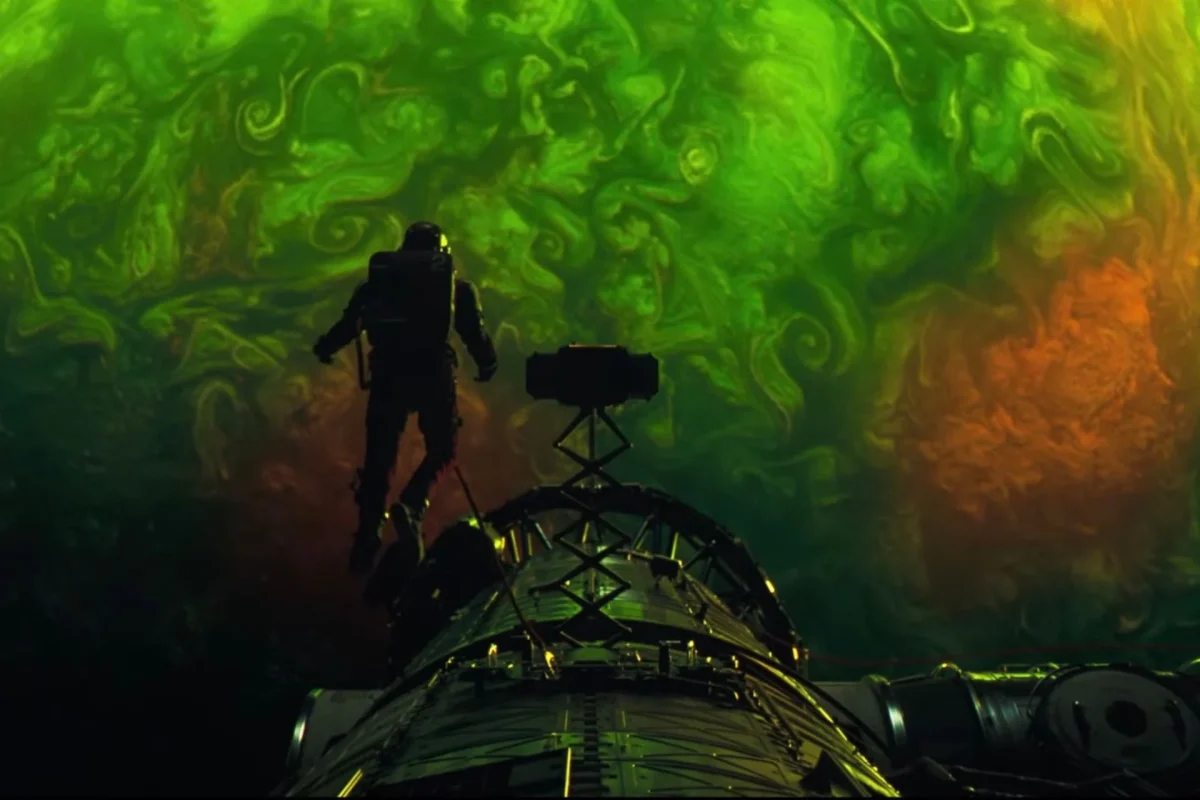
“Project Hail Mary” is many things. In fact, the way it balances so many different themes is impressive in and of itself. The film follows stranded astronaut Ryland Grace, a middle school science teacher who wakes up completely alone on a spacecraft in a wholly different star system, with no idea how he got there or what his mission is. Through a mix of trial-and-error and sudden flashes of memory, helping him to put the pieces together, Dr. Grace realizes his objective: find out how to save Earth’s sun from dimming exponentially enough to end human civilization. The curveball in this plan comes when Dr. Grace is suddenly approached by alien life and realizes that he’s not the only one trying to save his home.
Ryan Gosling plays Dr. Grace with his usual seemingly effortless charm and still manages to ground the character in reality. One of the more harrowing realizations is that the Hail Mary doesn’t have enough fuel — and it was built that way on purpose. Not only is Dr. Grace alone, but he was sent to space knowing that the mission plan included his sacrifice for the cause. Gosling manages to capture these deep ethical dilemmas while balancing Dr. Grace’s humorous, middle-school-teacher demeanor, giving Dr. Grace the depth that his first-person point of view provides in the novel.
And yet, Gosling is not the star of the show by a long shot. The alien he meets on his journey — a spider-shaped rock creature, whom Dr. Grace aptly names “Rocky” — steals every scene he’s in. The creature was brought to life for the film using practical puppet work, with touchups in post-production — but Rocky’s movements and voice all come from James Ortiz. Ortiz was in charge of puppeteering Rocky’s physical form, as well as voice-acting for the creature.
The relationship between Rocky and Dr. Grace is the heart and soul of this story, and Gosling and Ortiz deftly capture every moment of it. The pair has immediate chemistry, in a way that hasn’t been brought to life onscreen in years. Their bond is what holds the film together, and the tightrope between humor and deep introspection is handled with incredible skill. The story has been jumping off the page since Weir published the novel, but director duo Christopher Miller and Phil Lord truly managed to project the core of the book onto the silver screen.
From an epic and tender score to jaw-dropping visuals, every element of this film just works. “Project Hail Mary” is, ultimately, a story about love. But wrapped inside that theme are dozens of others — sacrifice, friendship, humanity and true bravery all play vital parts in the thematic storytelling of both the novel and the film adaptation. The fact that those themes still remain integral to the film is proof in and of itself that the directors succeeded in making a faithful adaptation, especially given their numerous consultations with Weir to make sure every detail was just right.