In the career of an actor, they are defined by the characters they play. Some are known for their moral complexity, questioning the lines of right and wrong, some are known for dashing heroism, creating icons of aspiration, the new heroes of our time. Perhaps the best of all can become chameleons in their role, embodying the characters they portray completely and making the unreal feel so real. And in a film like “The Smashing Machine,” these performances are necessary.
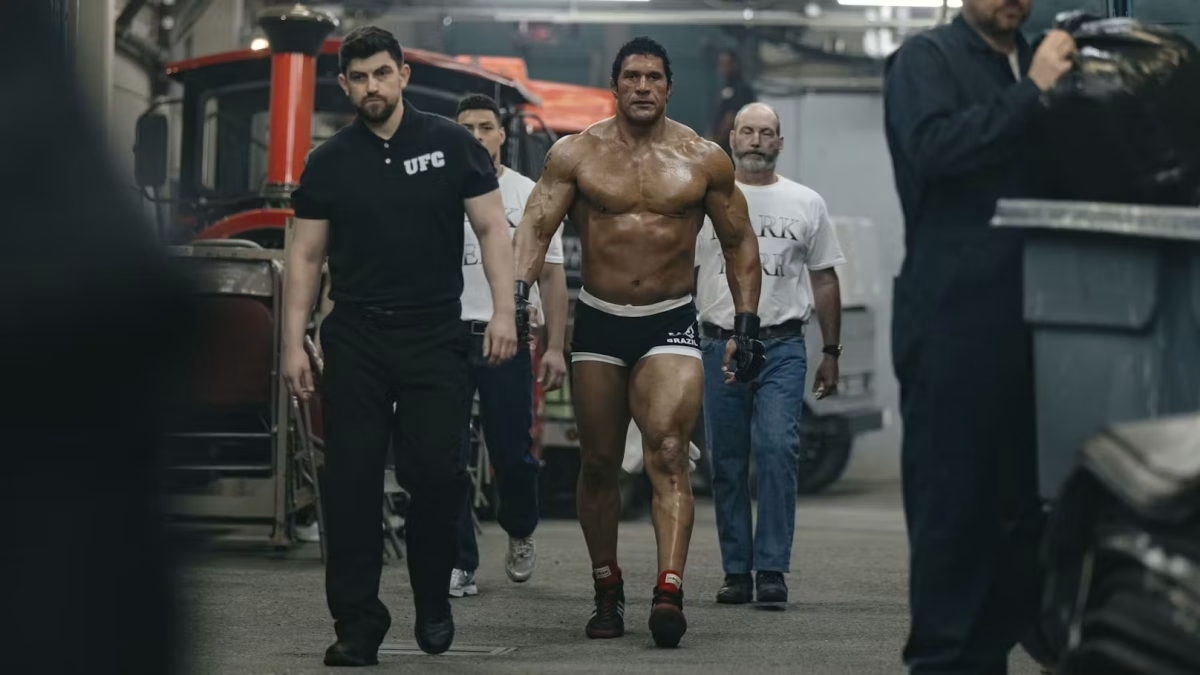
Written and directed by Benny Safdie, “The Smashing Machine” is based on the true story of UFC fighter Mark Kerr, played by Dwayne Johnson, as he navigates his turbulent career as a fighter, his volatile relationship with his girlfriend Dawn (Emily Blunt) and his battle with addiction. The film premiered at the Venice International Film Festival, where Safdie won the Silver Lion for his direction, and the film as a whole was nominated for the Golden Lion (the top prize of the festival).
When one would think of some of the truly great actors of our time, many would not say that Johnson is one of them, which is why this dramatic turn of his may feel so unexpected. His natural action-star bravado, something Johnson maintained for over two decades, is sidelined entirely for this film, replaced by something shockingly earnest and, naturally, out of character. Contrary to what his physique may betray, Johnson’s Kerr, for much of the film, is quiet and reserved, side-stepping the confident machismo of his usual repertoire. It is refreshing to watch Johnson portray someone so raw and vulnerable in a performance. Does this performance reach the euphoric highs of some of the greatest to ever do it? No. But Johnson’s willingness to do something so out of his range is laudable, and it’s a solid first effort. Whether or not he continues down this route (especially considering his next film is a live-action remake of “Moana,” a film under ten years old), remains to be seen.
The only other person who could possibly outshine Johnson is Blunt’s Dawn, who channels the somber highs and volatile lows of the character with ease. Unlike Johnson, Blunt is not entirely out of her wheelhouse here, especially after her Academy Award-nominated performance in “Oppenheimer,” where she commanded the screen with a silent vigor. But unlike that performance, Blunt commandeers a different kind of power here, a kinetic force to rival Johnson’s physical presence. Dawn is Kerr’s perfect foil, which makes their relationship so heartbreaking (and so engrossing) to watch.
Diverging from his previous collaborators who he worked with on films such as “Good Time” and “Uncut Gems,” (including his brother Josh and co-writer/editor Ronald Bronstein) Safdie attempts to go it on his own, with mixed results. Foremost, the film seems to be taking many cues from the 2002 documentary film (also titled “The Smashing Machine”), and it shows, with Safdie’s choice of cinema verité-esque cinematography, provided by Maceo Bishop. The script, however, shows the weak points of this film, trading in the quick pace of “Uncut Gems” in for something more gentler, but this choice takes away any hard punch the film could’ve thrown – less a hook to the face, more a slow dance between two fighters, waiting for a punch that will never come. It’s the Achilles’ heel of this film: a sure knockout made into something of a soft blow.
“The Smashing Machine” is a film that will be remembered by its performance and little else. Blunt is fantastic as usual and Johnson gives it his all, but Safdie’s first solo effort lacks the punch of his previous films, and the slow pace and weak script soften its blow.