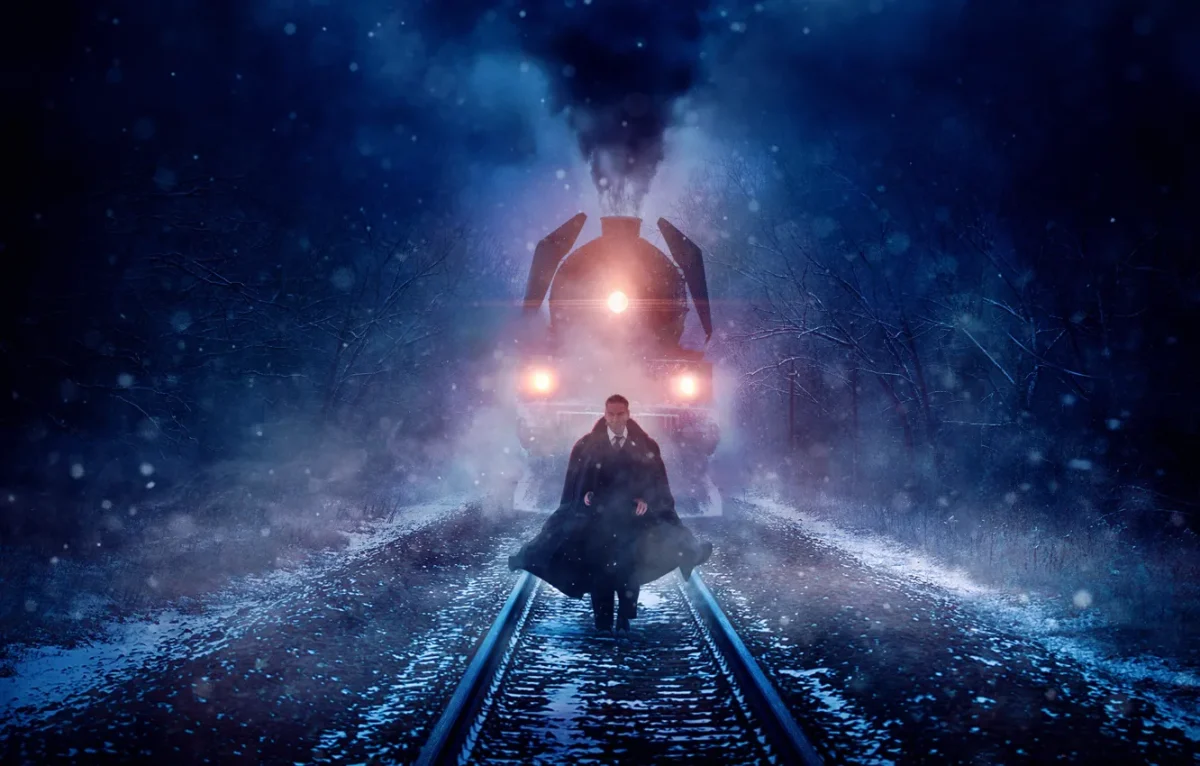
As we gradually move from fall to winter, it seems like perfect timing to talk about one of my all-time favorite murder mysteries—set on a train in the middle of winter!
I may be biased, because I have loved Agatha Christie’s novel of the same name since middle school, but “Murder on the Orient Express” is one of the most effective murder mysteries out there today. The film captures and elevates every aspect of an ingenious novel, and Kenneth Branagh’s commitment to bringing the iconic story to life pays off.
“Murder on the Orient Express” is one of those movies that immerses you in its world from the very first scene. Branagh’s portrayal of iconic detective Hercule Poirot never falters, and situating the audience in an unrelated case to introduce us to his style of investigation—and his dramatic flair—helps to get the story moving in a more narratively satisfying way. It acts as a substitute for the context that a reader of the novels would already be provided. While someone picking up “Murder on the Orient Express” in a bookstore might’ve read a Hercule Poirot mystery before and might be familiar with his quirks, a moviegoer doesn’t have this advantage. So, the sequence at the film’s start is an ingenious way of setting up the tone, as well as Hercule Poirot himself, so we are able to follow along easily once the film enters its main storyline.
The primary plotline in and of itself—the titular murder, that occurs on the titular train just as an avalanche disrupts the journey and traps all of its passengers together indefinitely—creates the perfect closed-door mystery. There are 12 possible suspects, and one of them has to have committed the crime. And not only that, but the murderer is still among them—and, for much of the film’s runtime, their motives are unknown. The setup in and of itself is a genius one, and Branagh builds it with a precision that makes it so satisfying to watch.
Branagh takes his time introducing each character, giving us just enough context to know who everyone is. Christie does this, too, of course, but the way Branagh translates it to film is incredibly impressive. One would think that a dozen suspects who all came together only a day or two prior to the murder itself would become a jumbled, confusing mess, but both Branagh and Christie manage to lay it all out in a way that feels incredibly clear and concise.
By the time the ball really gets rolling, the film is an adrenaline rush from start to finish. Sitting at just under two hours, it does a masterful job (just as the novel does) at revealing clues one at a time, each one revealing more than the last. Poirot’s interviews of each passenger are expertly written to pull back the curtain just enough to keep us engaged, but not enough to reveal all the cards until the very end.
The final confrontation is one of my favorite endings in any movie. The score that’s been subtly presenting us with thematic moments finally soars as Poirot makes his final discoveries, and the minutes-long monologue from Branagh feels almost Shakespearean—no doubt because of his extensive history with Shakespeare’s works, both in front and behind the camera.
That’s one of the things that I love the most about this movie. It expertly balances drama and comedy, and the moments that have weight still genuinely bring me to tears, even upon my dozenth rewatch. It’s a story that succeeds because of how simple and human it truly is. On the surface, it comes off as layered and overly complex. But once you peel back all of those layers and truly look at the crux of the mystery’s solution, it has a heart that any viewer can immediately understand and sympathize with.